Glossary
Every word real collectors use — explained like you're 10, not 40. Search it, save it, sound smart at the next trade.
A 'fair' trade is usually within 10% of even value. Over 25% is where feelings get hurt.
Card collecting lingo A–Z.
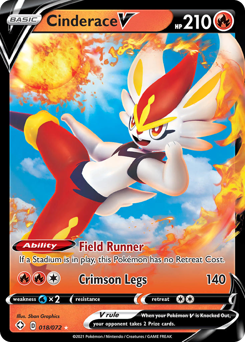
Add-On
Extra card to balance a trade.
If your card is $5 more, ask them to throw in a $5 card. That's how fair trades work.
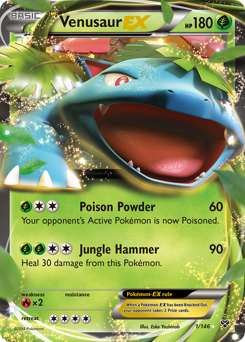
Alt Art
Alternate artwork of a card.
Same Pokémon, wildly different picture. Alt arts are some of the most valuable modern cards.
BGS
Beckett Grading Services.
Uses half-grades (like 9.5) and sub-grades for centering, edges, corners, and surface.
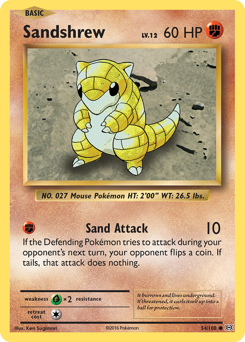
Black Label
BGS 10 with all 10 sub-grades.
Every sub-grade is a perfect 10. Almost unreachable. Legendary cards.
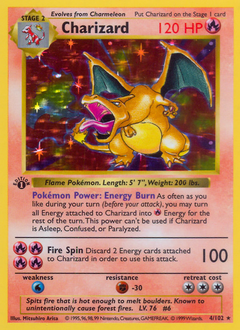
Blister Pack
Retail hanging pack.
Cardboard-backed pack with 1–3 boosters plus a promo. Common at Target and Walmart.
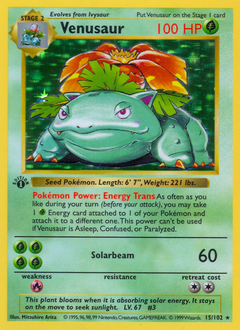
Booster
A single pack of cards.
Usually 10 cards. You're paying for the chance at a rare — not the rare itself.
Booster Box
36 packs sealed together.
The 'wholesale' of Pokémon. Best pack-opening value, but a big upfront cost.
Booster Bundle
6-pack mini box.
A cheaper way to open packs from a set without committing to a full box.
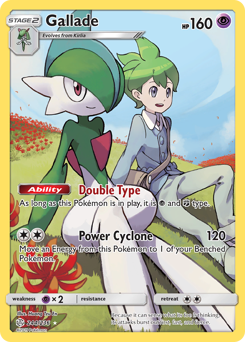
Bulk Submission
Sending many cards for cheaper.
Grading companies offer discounts for larger submissions. Great for bulk vintage.
Buylist
What a shop pays for your card.
Card shops publish buy prices. Usually 40–70% of market. Fast cash, lower payout.
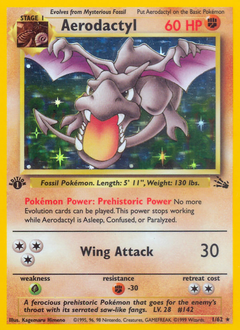
Card Saver
Semi-rigid holder for grading.
PSA requires cards be shipped in Card Saver I holders — not top loaders. Learn the difference.
Cardmarket
EU card marketplace.
Europe's version of TCGPlayer. Uses euros and trend price.
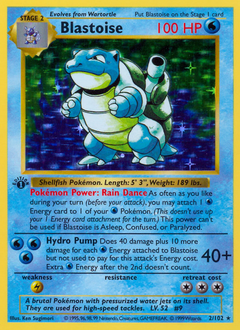
Centering
How even the borders are.
Compare left/right and top/bottom borders. Bad centering can drop a PSA 10 down to a PSA 8.
CGC
Certified Guaranty Company.
A rising grader — often cheaper and faster than PSA. Slabs look different.
Chase Card
The card everyone wants.
The most hyped pull of a set. Chase cards drive prices for the whole product.
Code Card
Free online-game code.
The paper card in every pack — redeem it in Pokémon TCG Live. Worth pennies to sell in bulk.
Comps
Comparable recent sales.
Prices from actual sold listings on eBay or TCGPlayer — not what people ASK, what people PAID.
Crossover
Moving a card from one grader to another.
Sending a BGS card to PSA (or vice versa) to try for a better grade or brand premium.
Cupping
Card curves like a bowl.
Foils warp over time from humidity. Sleeve + top loader + dry storage prevents it.
DMG
Damaged.
Below Heavily Played. Big creases, tears, water damage, or writing. Value drops 70%+.
Energy
Cards you attach to attack.
Basic Energy powers attacks. Each Pokémon needs specific energy types.
Error Card
Card with a printing mistake.
Missing text, wrong color, misaligned art. Some errors (like No Stage 1 Venusaur) are worth thousands.
ETB
Elite Trainer Box.
A box with ~8–10 boosters plus sleeves and dice. Better value than loose packs, most of the time.
Evolution
Basic → Stage 1 → Stage 2.
Some Pokémon evolve into stronger forms. You need the earlier stage in play first.
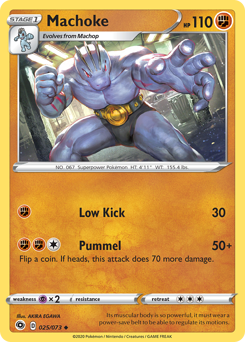
EX / GX / V / VMAX / ex
Powerful special Pokémon.
Different eras named their big Pokémon differently. All hit harder — and give the opponent 2 prizes when KO'd.
Fair Trade
Both sides are within 10% value.
Use a price app. If your side is worth $22 and theirs is $20, that's fair. $22 for $12 isn't.
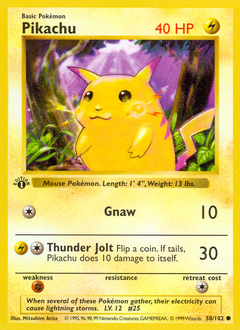
First Edition
Marked '1st Edition' stamp.
The first print run of an old set. Usually way more valuable than unlimited copies.
Flipping
Buying to resell quickly.
Buy a sealed box, wait a month, sell for profit. Works — but you can also lose money.
For Trade / FT
Cards someone will swap.
Common in trading Discords and forums. Opposite of PC.
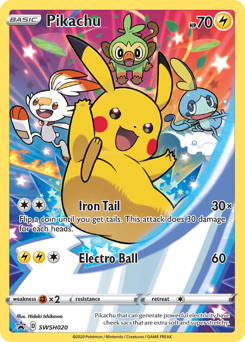
Full Art
Art fills the whole card.
No standard border. Usually pulled from higher rarity slots — collectors love them.
Gem Mint
The 10 grade — near-flawless.
PSA 10 / BGS 9.5. Sharp corners, perfect centering, clean surface, no print flaws.
God Pack
A pack with all rares.
Extremely rare misprinted pack where every card is a hit. Sealed god packs command huge prices.
Gold Card
Metallic gold secret rare.
Cards printed in gold foil — often trainers or Pokémon at the very end of the set number list.
Goldin
Premium collectibles auctioneer.
Where six-figure cards trade hands. Watch auctions to learn what grail cards actually sell for.
Grading
Sending a card to be scored.
Companies like PSA give cards a 1–10 grade. A PSA 10 can be worth 5–20x a raw copy.
Grail
A collector's dream card.
The one card you're chasing forever. Everyone's grail is different — that's the fun.
Holo
Shiny foil artwork.
The picture itself shimmers. Holos are usually rarer and worth more than the same card in non-holo.
HP
Hit Points.
How much damage a Pokémon can take before it's knocked out. Printed top right.
Hype
Short-term price spike.
A YouTuber pulls a card, everyone wants it, price jumps. Hype almost always cools off. Don't chase.
Hyper Rare
The top-tier secret rare.
Gold or rainbow cards at the very end of a set. Hardest to pull, often lowest print.
Illustration Rare
Modern art-focused rare.
Called IR. Introduced with Scarlet & Violet — beautiful full-art cards below Special Illustration Rare.
Indentation
Pressure dent in the card.
A dent from being pressed too hard. Often invisible until you tilt the card.
ISO
In Search Of.
What a trader is hunting for. 'ISO Charizard alt' = they want that card.
Japanese Print
Cards printed in Japan.
Often better centering and print quality than English. Popular for high-grade collectors.
LGS
Local Game Store.
The card shop in your town. Best place to learn, trade in person, and meet other collectors.
Long
Holding a card long-term.
'Going long on Base Set' = buying and holding for years. Vintage sealed is the classic long play.
Loose
Single card, not sealed.
The opposite of sealed. 'Loose singles' just means individual cards for sale.
Lopsided
One side gives up way more.
A trade where one collector loses 20%+ of value. Walk away or ask to add on.
LP / MP / HP
Lightly / Moderately / Heavily Played.
Condition grades below NM. Each step down usually cuts value by 20–50%.
Market Price
TCGPlayer's average sale price.
The number to trust on TCGPlayer — a rolling average of recent verified sales.
Master Set
Every card from a set, all variants.
Includes reverse holos, promos, and secret rares. The 100% completion goal.
Meta Card
A card that's strong in tournaments.
Cards used by top players spike in price. When the meta shifts, prices drop fast.
Miscut
Card cut off-center at the factory.
The whole card is shifted. Rare miscuts can be worth more than the normal version to error collectors.
NM
Near Mint.
Looks basically brand new. Sharp corners, clean surface. NM is the standard for collectors.
PC
Personal Collection.
Cards you'll never trade or sell. 'That's a PC card' means don't even ask.
Perfect Fit
Snug inner sleeve.
A tight sleeve that goes on before the penny sleeve. Double-sleeving = double protection.
Pop Report
How many of a card have been graded.
PSA and BGS publish counts. Low pop 10s = higher price. Check before you buy.
Pre-Grade
Checking a card before sending it.
Inspect centering, edges, corners, and surface under light. If it's not clean, don't waste the fee.
PriceCharting
Historical price database.
Great for checking a card's long-term value trend, not just today's price.
Print Dot
Tiny ink speck.
A speck of ink from the printer. Common on holos. Kills a gem mint grade.
Print Line
Thin factory line on the card.
A faint line from the printing press. Not your fault — but graders still ding it.
Print Run
How many copies exist.
Older sets had small print runs, so they're rarer. Modern sets print millions.
Pristine
BGS 10 — better than Gem Mint.
The rarest grade. All four sub-grades must be 9.5 or higher. Massive premiums.
Prize Card
Cards set aside at game start.
Take one when you knock out an opponent's Pokémon. First to 6 prizes wins.
Promo
A card not from a normal pack.
Given out at events, in tins, or with special products. Marked with a black star or 'PROMO'.
PSA
Professional Sports Authenticator.
The most popular grading company. A PSA 10 is the gold standard for most collectors.
Pull Rate
Your odds of pulling a card.
How often a rare shows up per pack. Chase cards can be 1 in 100+ packs.
PWCC
High-end card auction house.
Where expensive graded cards get sold. Also a good comp source for vintage.
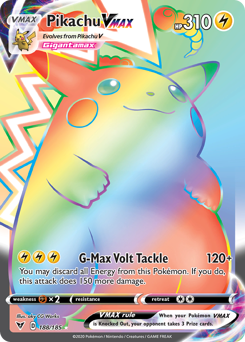
Rainbow Rare
Rainbow foil version of a card.
A hyper-rare printed with a rainbow gradient. Usually numbered above the set total as a secret rare.
Rarity
How hard a card is to pull.
Circle = Common, Diamond = Uncommon, Star = Rare, and stars with color/holo = Ultra Rare or higher.
Regulation Mark
Letter showing tournament legality.
A tiny letter (like 'G' or 'H') on the card. Rotates out of Standard as new marks come in.
Reprint
A card printed again in a new set.
Reprints crash prices because supply doubles. Watch for reprint announcements.
Reverse Holo
Shiny everywhere except the picture.
The border sparkles instead of the art. Almost every card in a set has a reverse holo version.
Rip
Getting scammed.
When you trade a valuable card for something worth much less. Usually because you didn't check the price.
Rotation
Old sets leave tournament play.
Every year, older sets rotate out of Standard. Can boost or hurt prices — depends on the card.
Sealed
Unopened product.
Boxes and packs that were never opened. Sealed product often grows in value years later.
Secret Rare
A card numbered past the set total.
If a set has 198 cards and a card is #205, it's a Secret Rare. Usually gold or rainbow.
Set
A named release of cards.
Every few months a new Set drops (like 'Base Set' or 'Paldea Evolved'). Each has its own symbol printed on the card.
Set Symbol
The tiny logo identifying a set.
On modern cards it's on the bottom right. On WOTC cards it's near the HP.
Shadowless
Base Set with no border shadow.
The earliest 1999 Base Set cards. No shadow behind the Pokémon art. Very valuable.
Singles
Buying one card at a time.
Skipping packs and buying the exact card you want. Almost always cheaper than gambling on packs.
Slab
The plastic case a graded card lives in.
Tamper-proof holder with the grade printed on top. Never crack a slab unless you're regrading.
Sleeve
Plastic protector.
Penny sleeves cost pennies and save dollars. Sleeve everything worth more than a snack.
Sold Listings
eBay's actual sale history.
Filter eBay by 'Sold Items' to see real prices. Asking prices lie — sold prices don't.
Special Illustration Rare
The chase alt-art tier.
SIR for short. The rare, full-art collector cards in modern SV sets. Usually the priciest pulls.
Sub-Grades
BGS scores for each category.
Centering, Edges, Corners, Surface — each gets its own 1–10. The overall grade is a weighted mix.
Surface Scratch
Micro scratches on foil.
Angle a holo under light — you'll see them. Very common and very damaging to grades.
Symbol
Tiny logo showing the set.
Look at the bottom of any modern card — that little icon tells you which set it came from.
TCG
Trading Card Game.
The whole hobby — cards you can collect, trade, and play with. Pokémon TCG launched in 1996 in Japan.
TCGPlayer
US card marketplace.
The main price guide in the US. Look at 'Market Price', not the highest listing.
Team Bag
Sealed bag around a top loader.
Keeps the card from sliding out during shipping. Cheap insurance.
Tin
Metal collectible box.
Comes with a promo card, some packs, and code cards. Sealed tins hold value.
Top Loader
Rigid plastic case.
Slide a sleeved card inside so corners don't get bumped. Standard for trading and shipping.
Trade Binder
Binder full of tradeable cards.
How collectors show what they have available. Bring it to LGS trade nights.
Trainer
Support card, not a Pokémon.
Item, Supporter, or Stadium cards that help you set up your deck.
Unlimited
Non-1st-edition print.
The regular print run after 1st Edition sells out. Cheaper, more common.
Value Trade
Trading purely by market price.
Ignoring 'want' — swapping so total dollar value matches. Safest way to trade with strangers.
Whitening
White marks on card edges.
Happens when cards get bent or rubbed. Big value killer on holos.
WOTC
Wizards of the Coast era.
The original 1999–2003 English cards. Base Set, Jungle, Fossil, etc. Often the most valuable.